
Home suitability
Draft · editorial review needed
Solar panels for a flat balcony: permissions, space and safety checks
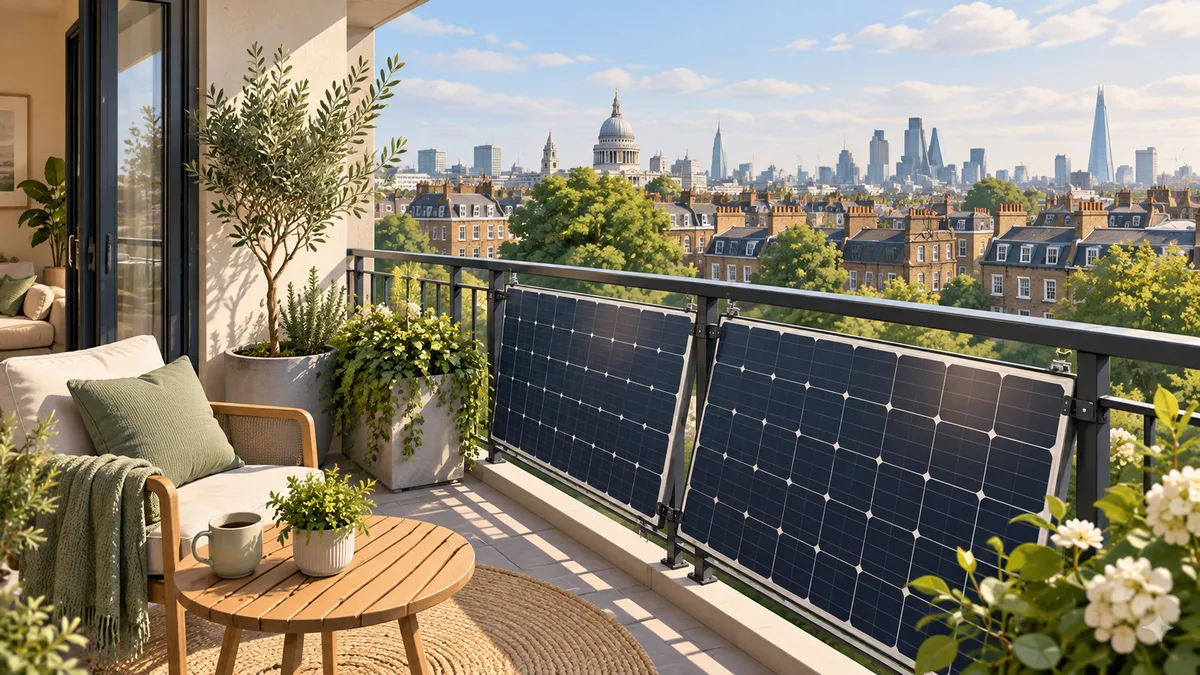
Check balcony ownership, fire and building rules, mounting loads, shading and safe access before considering balcony solar.
The short answer
Quick answer
Before placing solar panels on a flat balcony, obtain approval from the landlord or building manager and confirm the proposed equipment does not conflict with building, fire-safety or structural rules. Then check secure mounting, shade, wind exposure and cable routing.
A balcony is part of a building system
Balconies may be privately used but still subject to lease conditions, shared-building rules or restrictions on alterations. Panels, frames and cables can affect external appearance, access, fire-risk planning and the structure.
Ask the responsible building manager or property owner about the exact panel, frame, position and cable route. Buildings with cladding, timber balconies or other fire-safety considerations need particular care.
Check the physical setup
- Measure usable space and keep exits, drains and access routes clear.
- Use only a mounting system intended for the location and follow the manufacturer’s wind and fixing instructions.
- Consider shade from the building and nearby structures throughout the day.
- Do not hang a panel over a public area or rely on improvised weights or fixings.
Quick answers
Common questions
Can I attach panels to balcony railings?
Only if the property owner or building manager permits it and the exact mounting system is designed and documented for that use. Do not improvise a fixing.
Are balcony solar rules the same across the UK?
Building, fire-safety and planning requirements can differ by nation and property. Check with the relevant local authority and building manager.
Further reading
Sources and official guidance
This guide is general information, not an assessment of a specific property or product. Check current official guidance and the manufacturer’s instructions before acting.