
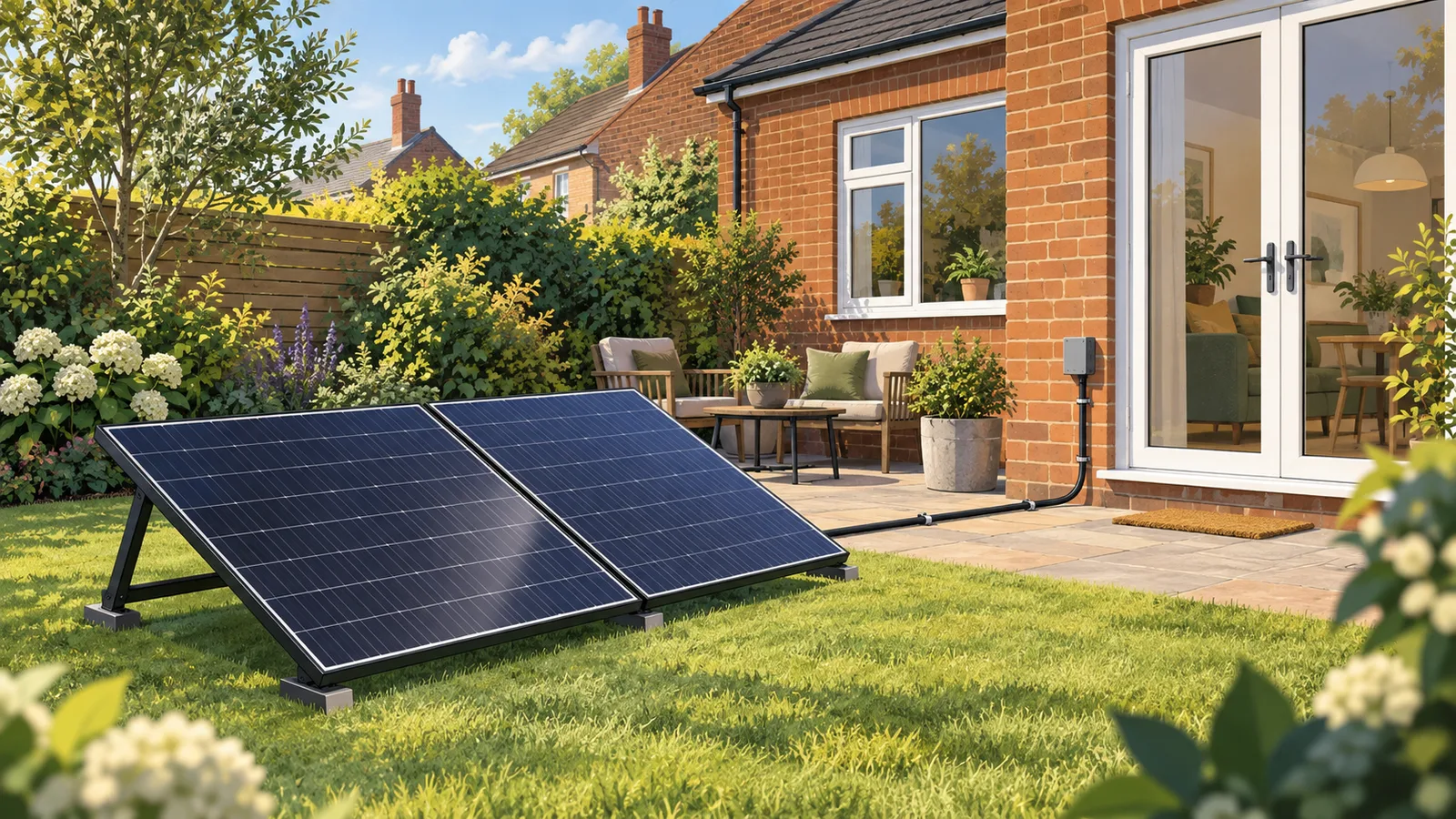
Energy basicsDraft 5 min
Watts and kWh: what a solar kit’s power rating really tells you

Understand the difference between power and energy, and why a watt rating alone cannot predict your electricity bill savings.
Guide 02The EasyPlugSolar journal
UK-focused guides to plug-in solar and everyday energy. Clear answers, useful checks and sources you can follow up yourself.
Explore the guidesPractical information for Great Britain. Check the latest local guidance and product instructions before you buy or install.
30 draft guides · editorial review needed · not published
Updated 1 October 2026 · 7 min read
The guide library
Every guide starts with a direct answer, then shows the checks, assumptions and source material behind it.
Understand the difference between power and energy, and why a watt rating alone cannot predict your electricity bill savings.
Guide 02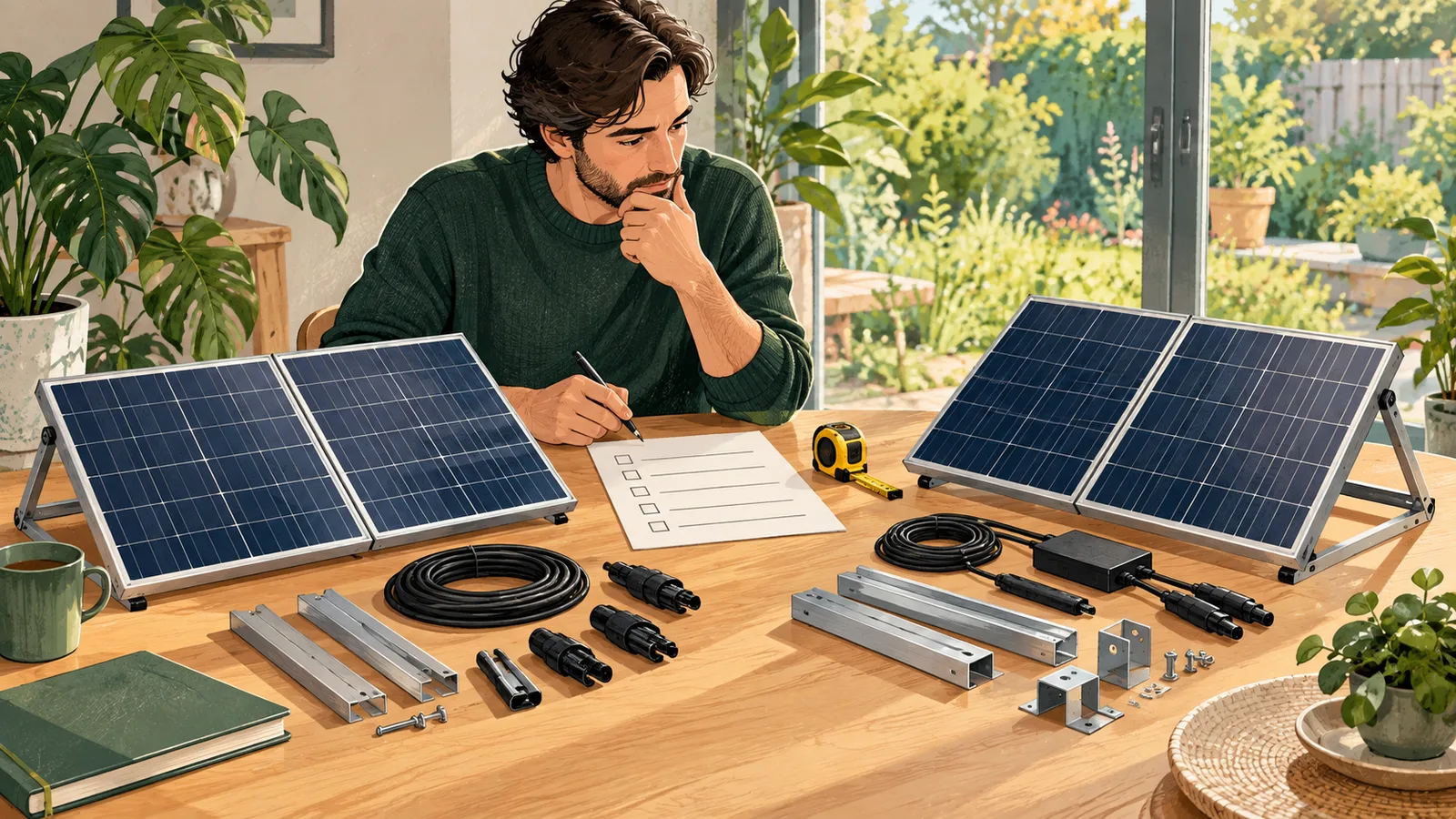
Use a like-for-like checklist covering the model, inverter, mounting, delivery, warranty and total price before choosing a kit.
Guide 03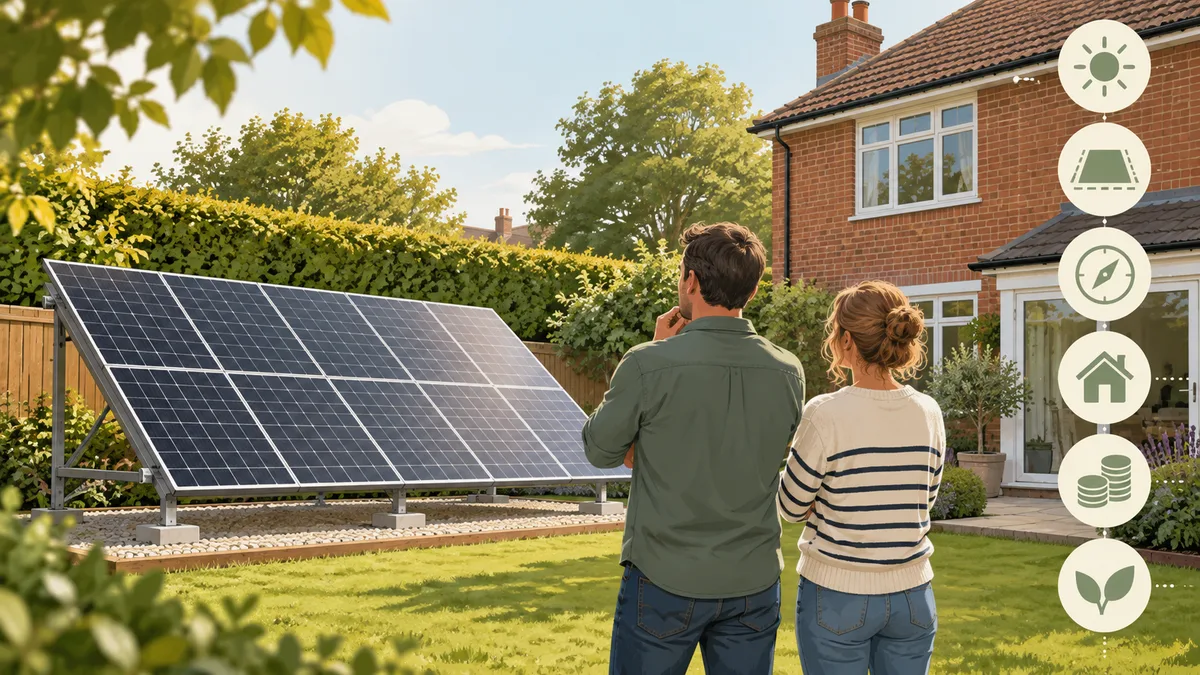
Assess the sunny space, safe cable route, permissions and daytime electricity use before choosing a plug-in solar kit.
Guide 04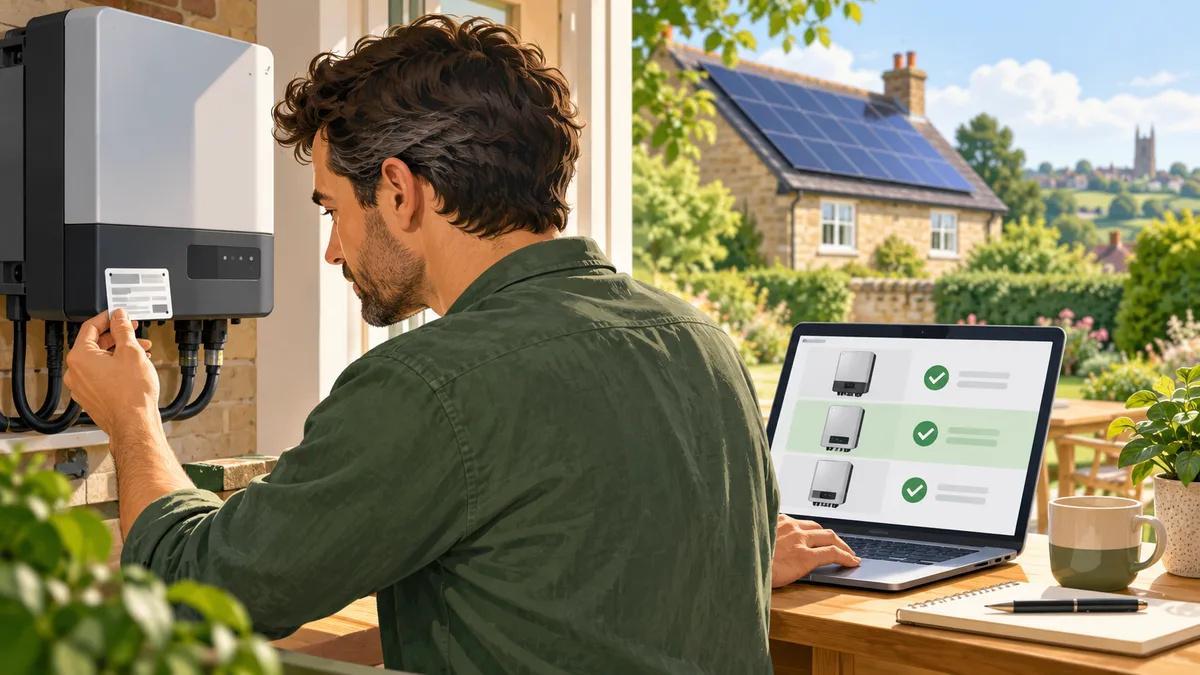
A practical way to check device identity and supporting paperwork without treating a brand name as proof of approval.
Guide 05
Renters should check tenancy terms, building rules, safe mounting and removal before buying portable solar equipment.
Guide 06
Check balcony ownership, fire and building rules, mounting loads, shading and safe access before considering balcony solar.
Guide 07
Planning rules depend on the nation, property and installation. Use this guide to identify the checks before committing to work.
Guide 08
Follow the exact product instructions and check the socket, circuit, cable and device documentation before use.
Guide 09
Cloud reduces available sunlight, but panels can still generate electricity; actual output varies with weather and system conditions.
Guide 10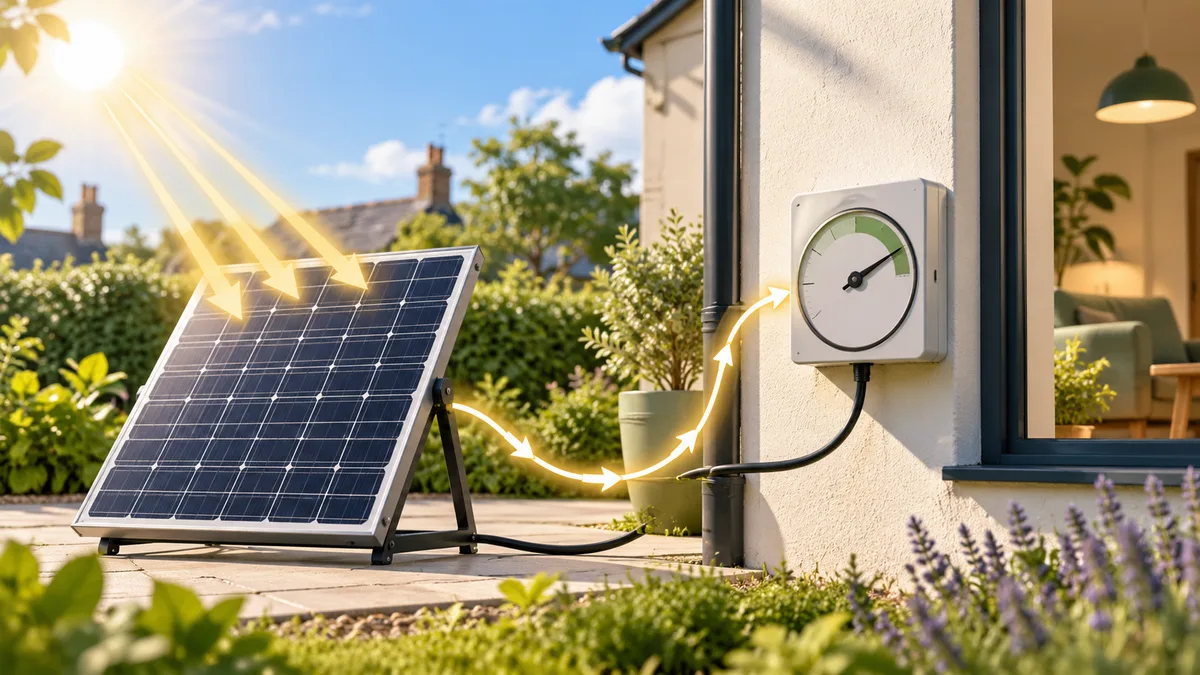
Learn what panel ratings do and do not tell you, and which site conditions shape a realistic generation estimate.
Guide 11
Direction affects when and how much panels generate, but shade, roof condition and household timing also matter.
Guide 12
Map shade from trees, chimneys and nearby buildings before choosing a panel position or comparing output estimates.
Guide 13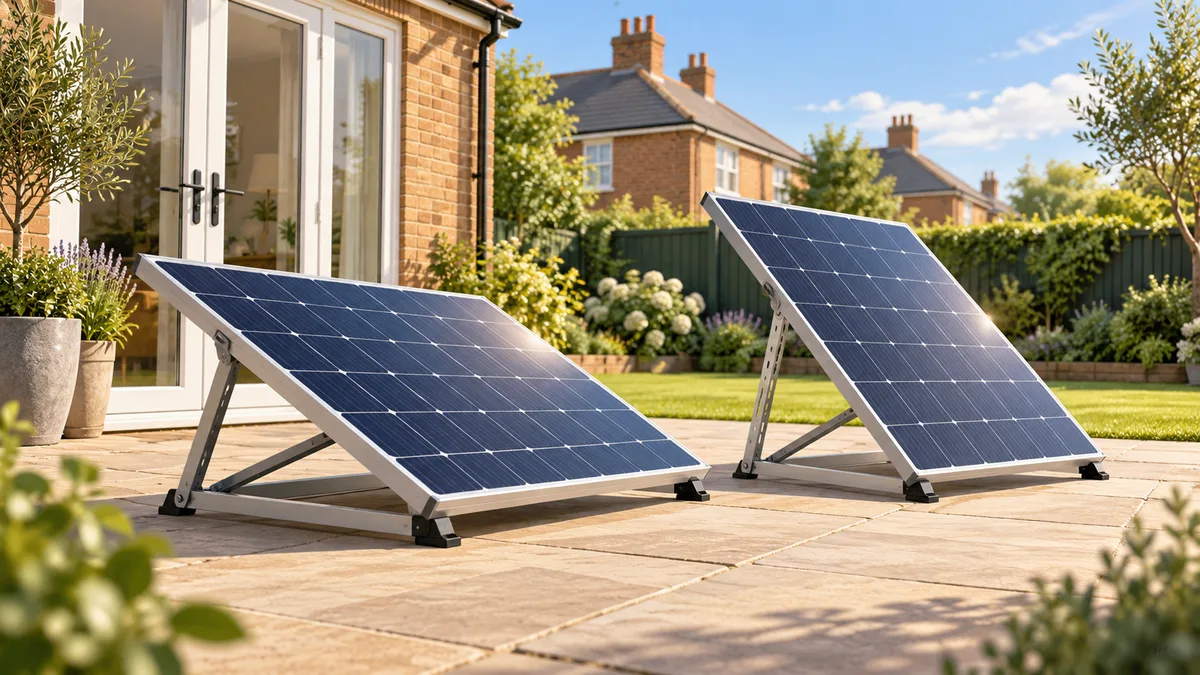
Panel tilt affects sunlight and mounting loads; compare expected generation with secure fixing and the product instructions.
Guide 14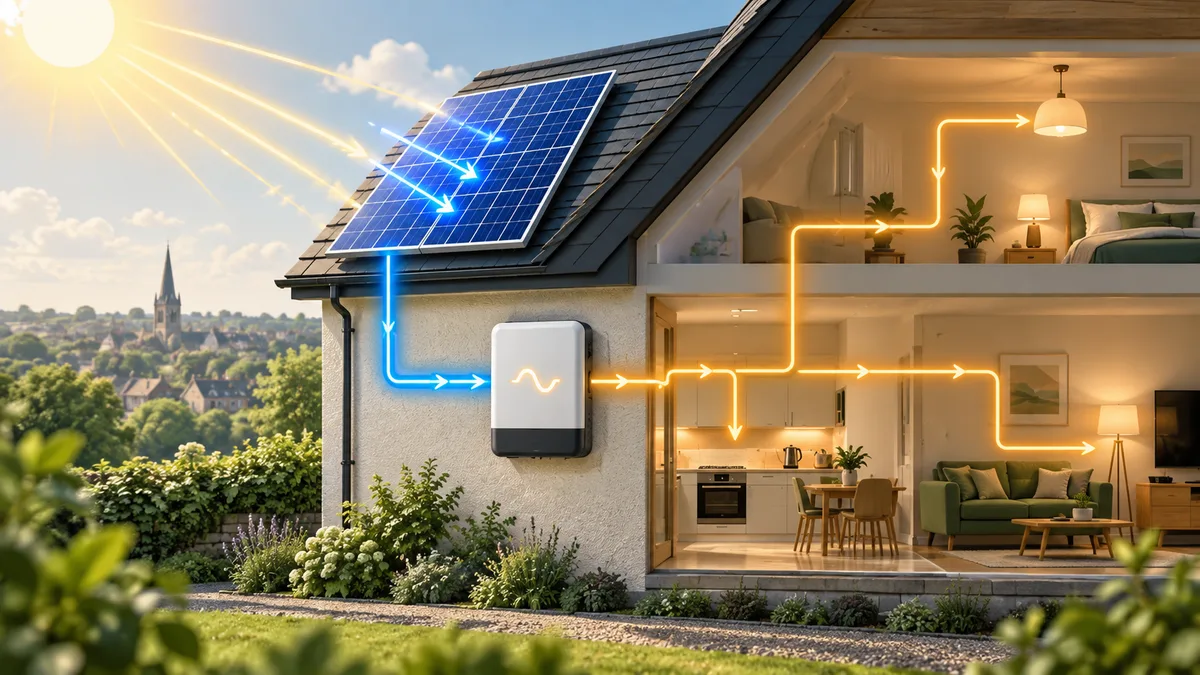
Understand the inverter’s role, why model details matter and how its rating differs from the panel rating.
Guide 15
Compare panel DC ratings and inverter output on a like-for-like basis instead of treating the biggest watt number as system output.
Guide 16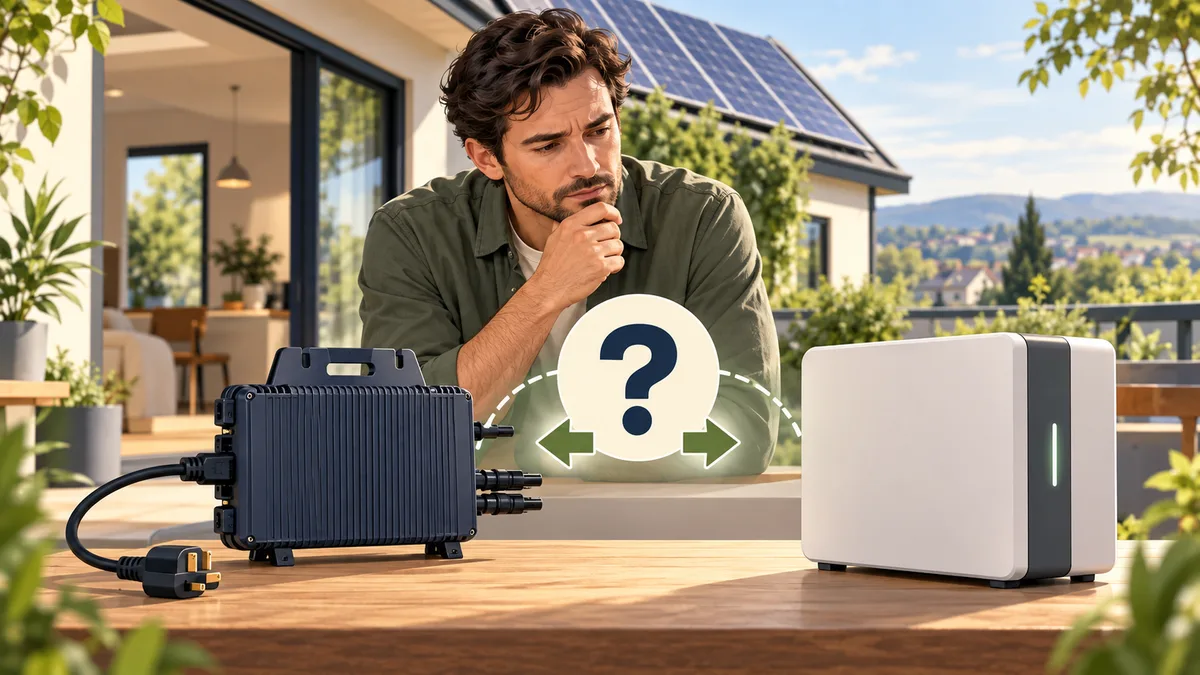
Compatibility and rules depend on the exact plug-in product; do not assume a separate battery can be safely added.
Guide 17
Compare usable capacity, power, system compatibility, installation, warranty and household demand before selecting a home battery.
Guide 18
Solar panels generate when there is light; stored energy or grid electricity can meet demand after generation falls.
Guide 19
Understand self-consumption and consider shifting flexible electricity use to sunny periods without disrupting household needs.
Guide 20
Build a transparent payback estimate from system cost, generation, self-use, export payments, maintenance and assumptions.
Guide 21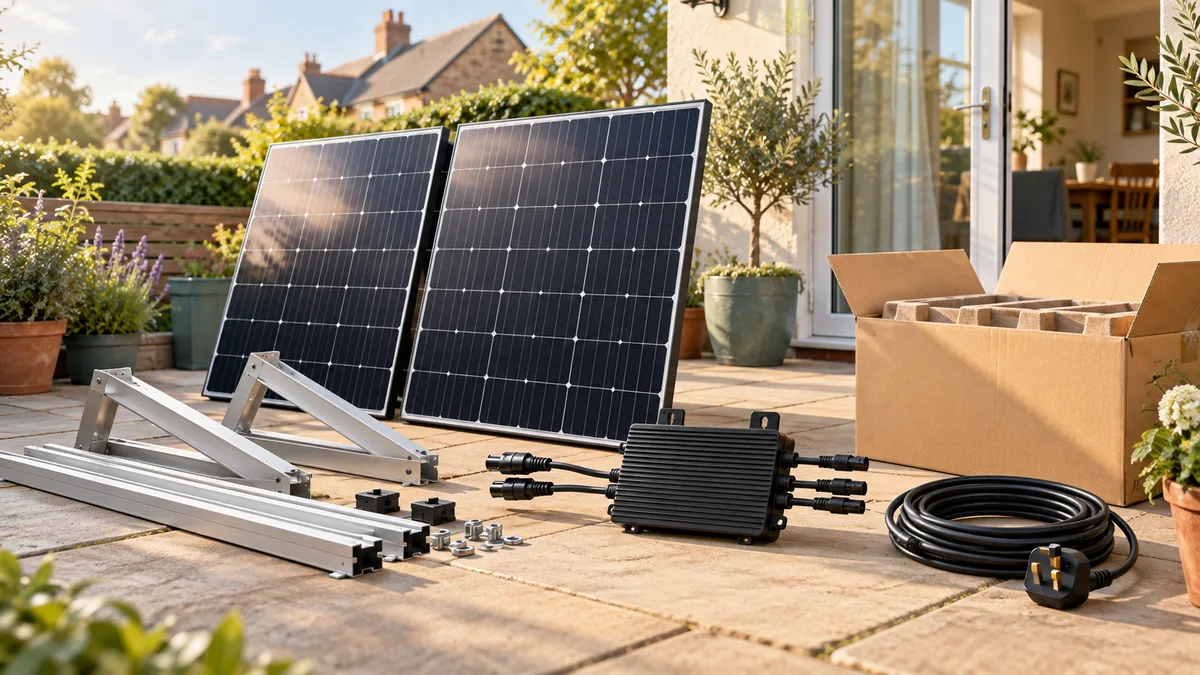
Compare VAT, delivery, mounting, cables, monitoring, warranty and support to understand the complete price.
Guide 22
Read the panel, inverter, battery and workmanship terms separately, including exclusions, proof requirements and who handles claims.
Guide 23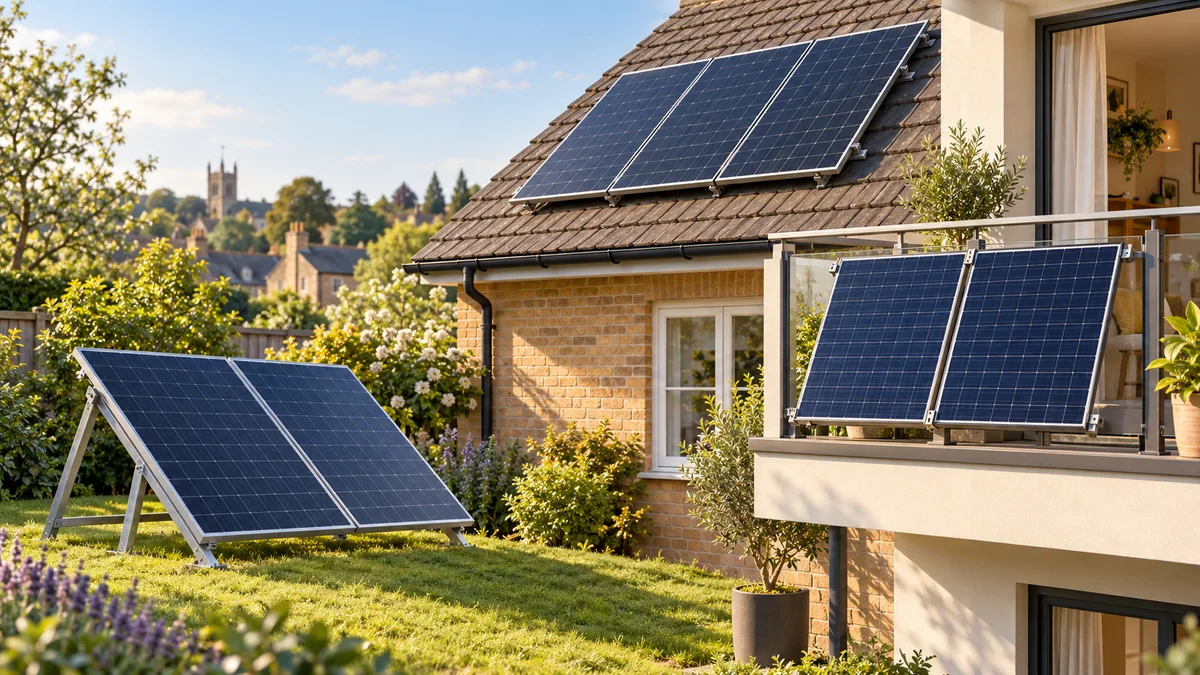
Compare mounting location, fixing method, wind exposure, permissions, access and the exact manufacturer instructions.
Guide 24
Use monitoring, visual checks and manufacturer instructions; do not climb onto a roof or attempt unsafe electrical repairs.
Guide 25
Day length, sun position and weather create seasonal differences; plan with an annual estimate rather than one month’s reading.
Guide 26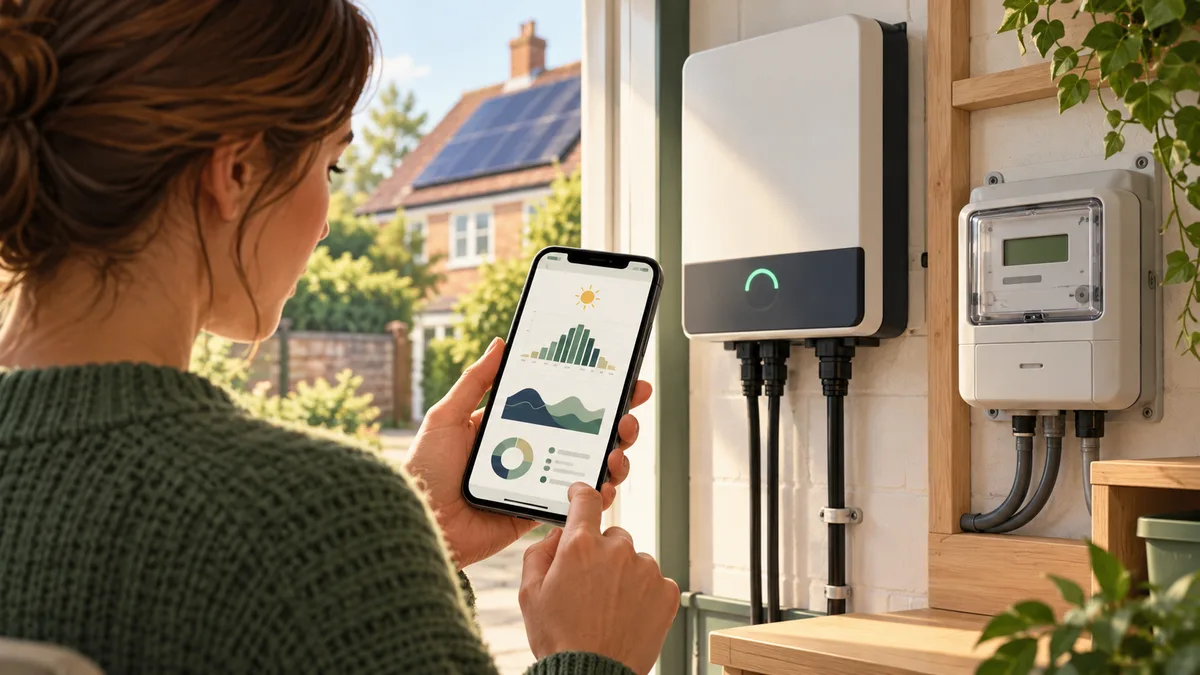
Learn to distinguish power from energy, check time periods and interpret generation alongside home consumption and export.
Guide 27
Compare scale, suitability, ownership, installation, permissions, system design and current rules before choosing either approach.
Guide 28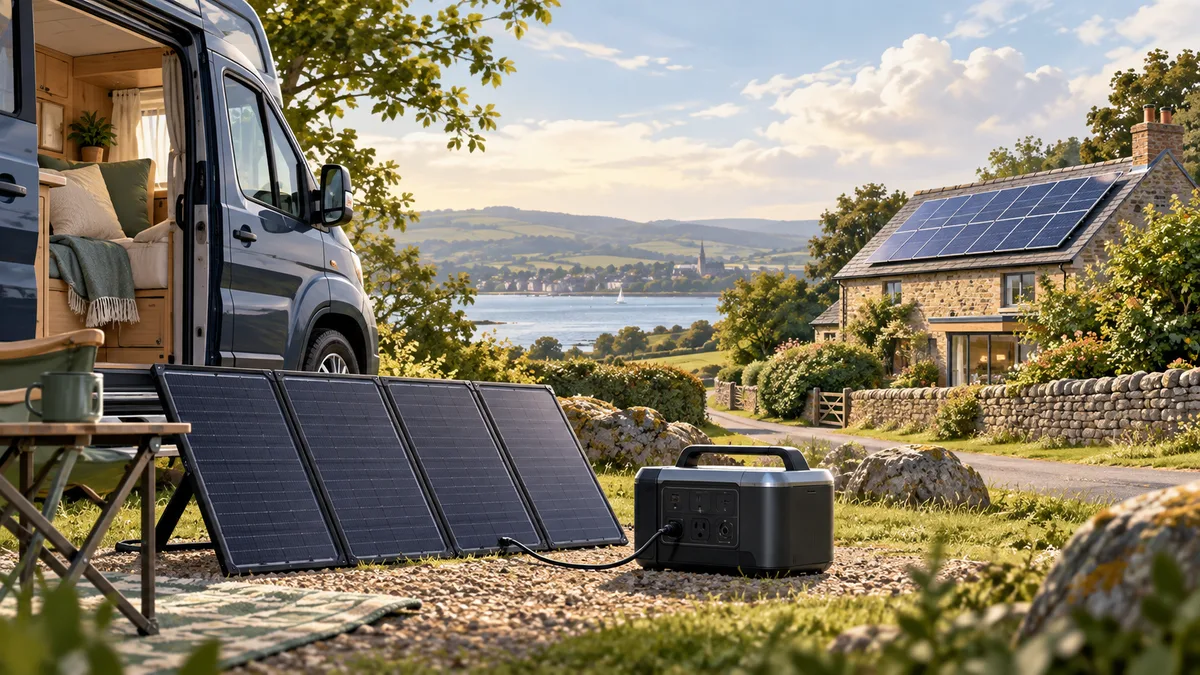
Compare grid-connected home solar with portable panel-and-battery products by purpose, output, storage, connection and safety.
Guide 29
Verify the exact product, seller identity, delivered terms, technical evidence and advertising disclosures before ordering.
Guide 30Put the numbers in context
Use the free tools to convert units or explore a solar-size scenario. Results are estimates, not a promise of savings.
Affiliate recommendations will be identified as advertising before readers engage with them. Products sold by EasyPlugSolar will be identified separately from third-party affiliate links.