
Solar basics
Draft · editorial review needed
Solar panel wattage vs inverter output: how to read the specs
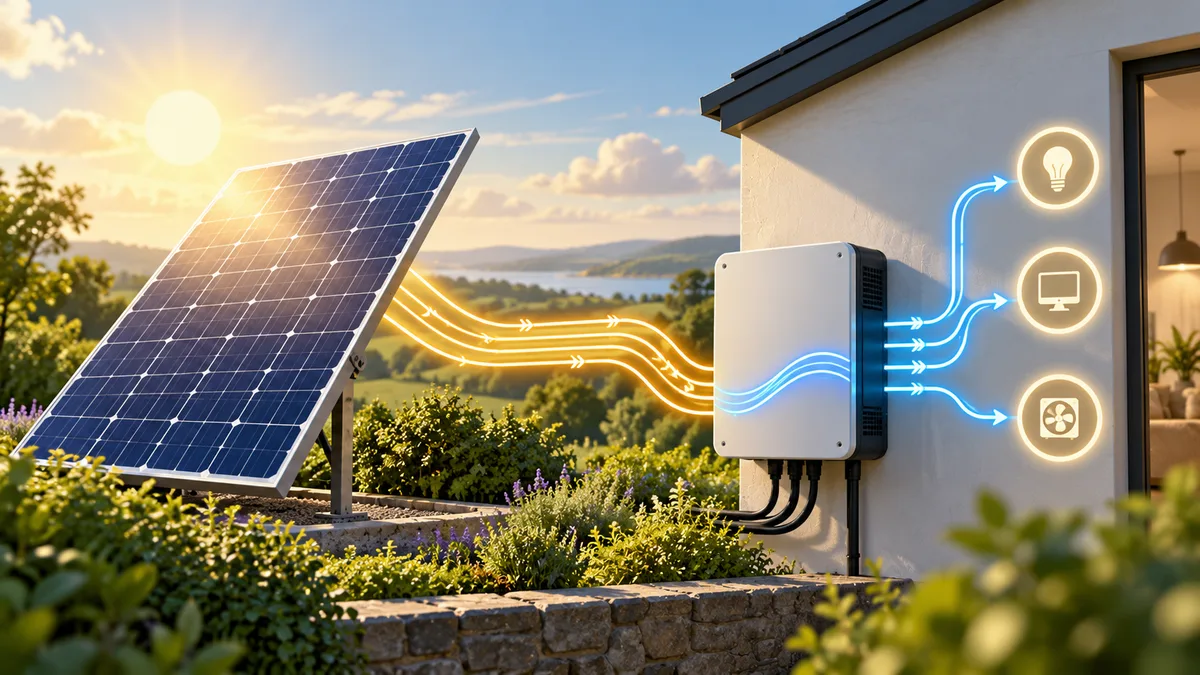
Compare panel DC ratings and inverter output on a like-for-like basis instead of treating the biggest watt number as system output.
The short answer
Quick answer
Panel wattage and inverter output refer to different components and conditions. Read the exact product datasheets, units and limits together; neither number alone predicts the electricity your home will receive.
Read each rating in context
A solar module’s rated power is usually expressed in watts under stated test conditions. An inverter datasheet describes conversion and output characteristics with its own limits. Check whether a figure is per panel, per system, DC input or AC output.
Product listings may highlight different figures, so compare model datasheets rather than marketing headlines. If the specification is incomplete, request clarification before purchase.
Translate ratings into realistic expectations
Actual generation changes with light, shade, temperature, orientation and equipment behaviour. The system may not operate at its peak rating for long periods, and a home’s electricity use varies at the same time.
Use a reputable estimate for energy over time and clearly label assumptions. Never convert a peak watt figure directly into promised daily savings.
Quick answers
Common questions
Should the panel wattage always match the inverter wattage?
Not necessarily. System designs can use different DC panel and AC inverter ratings, but the configuration must be supported by the manufacturer and appropriate for the installation.
Which number should I use to estimate electricity savings?
Neither rating alone is enough. Use expected kWh generation, self-consumption, current tariff assumptions and the full system specification.
Further reading
Sources and official guidance
This guide is general information, not an assessment of a specific property or product. Check current official guidance and the manufacturer’s instructions before acting.