
Batteries and storage
Draft · editorial review needed
Home battery storage explained: what to compare before buying
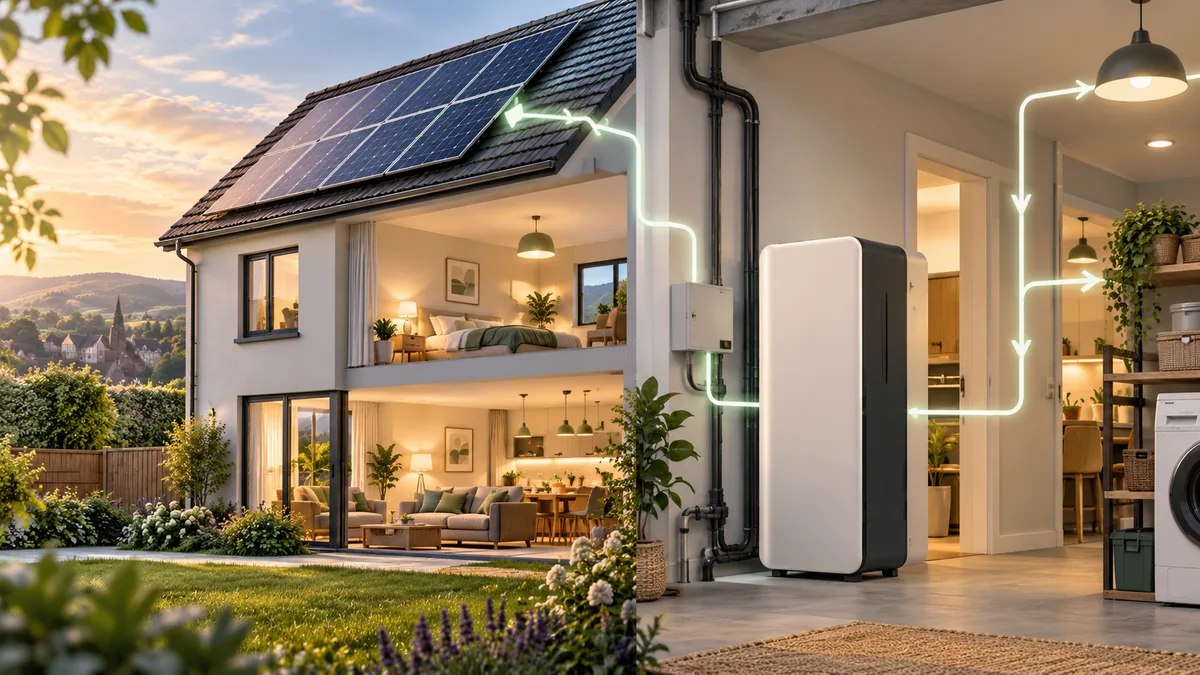
Compare usable capacity, power, system compatibility, installation, warranty and household demand before selecting a home battery.
The short answer
Quick answer
A home battery stores electricity for use later, but the right system depends on your generation, demand, tariff, power needs, compatibility and budget. Ask an experienced installer to size and configure it for your home.
Capacity is not the only specification
Battery capacity describes how much energy can be stored, while power describes how quickly it can charge or discharge. Usable capacity, efficiency, reserve settings and backup capability can differ between models.
Compare the battery with the generation system and the loads you want it to serve. A high capacity does not guarantee that it can power every appliance or provide whole-home backup.
Compare costs and support
- Check compatibility with the inverter and any existing solar equipment.
- Ask for the usable capacity, output power, efficiency assumptions and warranty terms.
- Include installation, electrical work, controls and any required upgrades in the quote.
- Ask how the system will be monitored, maintained and supported after installation.
Quick answers
Common questions
How large a home battery should I buy?
Sizing depends on your electricity use, solar generation, desired backup or shifting, tariff and future plans. Get a site-specific design rather than choosing from capacity alone.
Can every battery provide backup in a power cut?
No. Backup depends on the battery, inverter, configuration and installation. Confirm which circuits, if any, are supported during an outage.
Further reading
Sources and official guidance
This guide is general information, not an assessment of a specific property or product. Check current official guidance and the manufacturer’s instructions before acting.