
Buying guide
Draft · editorial review needed
Plug-in solar in Great Britain: what to check before you buy
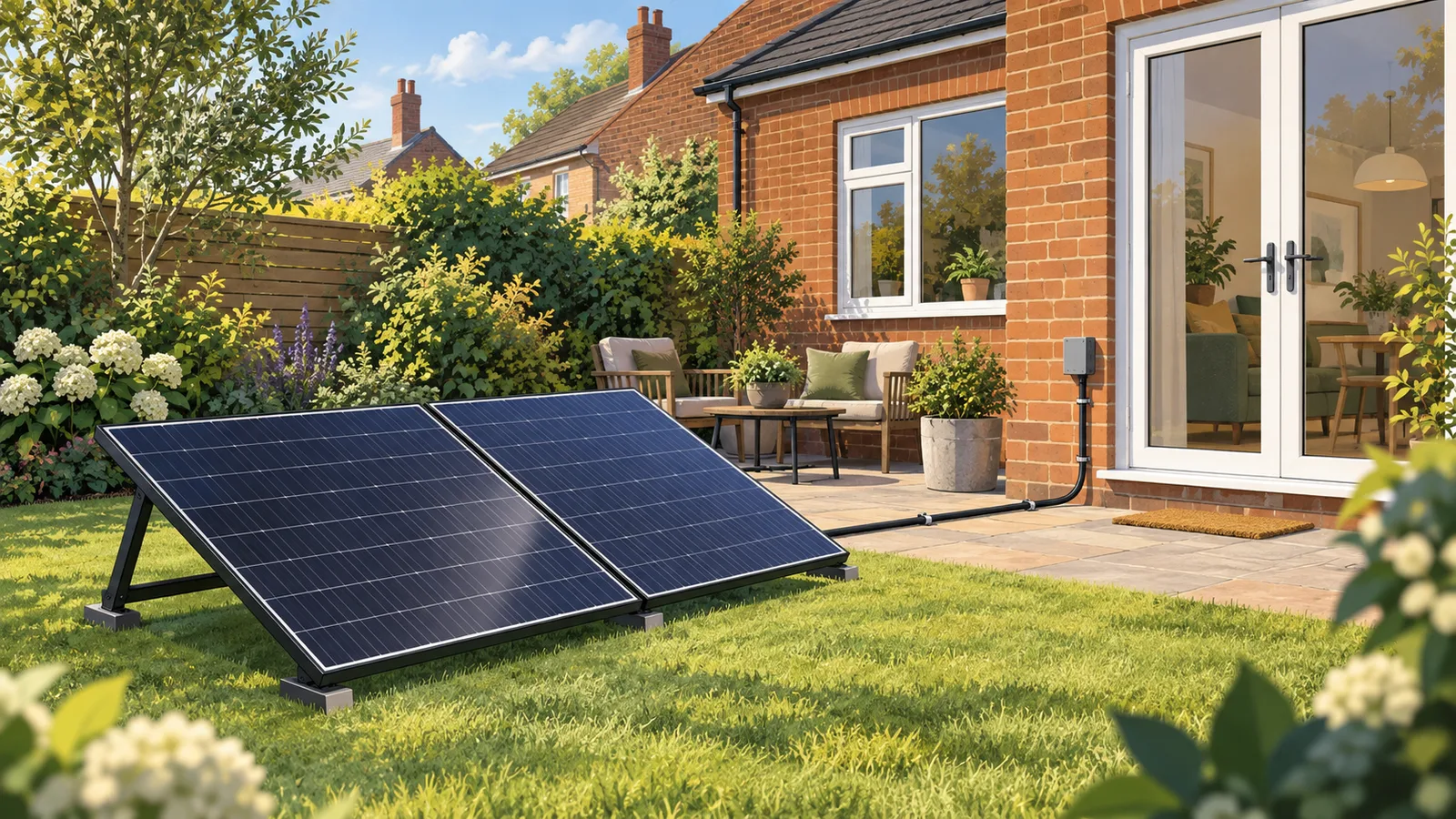
A practical checklist for checking permissions, your home, the exact device, and the full cost before choosing a plug-in solar kit.
The short answer
Quick answer
Before buying, confirm that your home and installation are suitable, get any permissions you need, and check the exact device against current UK guidance and the ENA register. Rules differ across the UK nations.
Start with the property, not the product
A kit can be technically suitable and still be wrong for a particular flat, garden, balcony or electrical installation. Check where the panels would sit, who controls that part of the building, and how the cable would reach a suitable socket before comparing prices.
- Ask a landlord, freeholder or building manager for permission where relevant, especially before fixing equipment to a building or changing an outdoor socket.
- Check local planning requirements. Listed buildings and conservation areas may need extra checks.
- Consider shading, orientation, secure mounting, weather exposure and whether the cable can reach without an extension lead.
Check the exact model and electrical setup
Do not rely on a brand name or a general claim such as “ENA compliant”. Match the full model identifier on the product you intend to buy to the current device register and product documentation. If the model is missing or the evidence is unclear, ask the seller before ordering.
If your consumer unit, wiring or socket condition is uncertain, get advice from a qualified electrician. Follow the manufacturer’s instructions and the current official guidance for your nation.
- Confirm the exact model appears on the ENA Connect Direct register.
- Check the product instructions for socket, circuit, cable and mounting requirements.
- Check current rules for your UK nation; guidance can change as standards develop.
Compare the complete delivered cost
The headline kit price may leave out items or costs that matter to your installation. Compare the same scope across sellers and ask for written confirmation when a quote is unclear.
- Is VAT included in the price shown to you?
- Are the mounting frame, fixings, ballast, cables and tools included?
- What are the delivery area, delivery method, lead time and access requirements?
- What does the warranty cover, who handles returns, and where can you get support?
Keep the decision grounded in your usage
A larger panel rating does not guarantee a particular bill saving. Output depends on conditions such as location, orientation, shading and the times you use electricity. Treat savings figures as estimates unless the assumptions match your home.
Write down the assumptions behind any payback claim: purchase price, expected generation, how much you can use at the time it is generated, and the electricity rate used in the calculation.
Quick answers
Common questions
Are plug-in solar panels allowed in the UK?
The answer depends on where you live and whether the exact device meets the applicable requirements. Energy Saving Trust’s guidance says compliant plug-in solar is available in England, Scotland and Wales, while Northern Ireland has different rules. Check current official guidance before buying.
How do I check if a plug-in solar model is compliant?
Search for the full model identifier on the ENA Connect Direct LCT Device Register and compare it with the label and documents supplied for the product. Ask the seller to resolve any mismatch before purchase.
Do plug-in solar kits include everything needed?
Not necessarily. Compare the included mounting parts, ballast, cables, tools and delivery. Check the product instructions for anything else your installation requires.
Further reading
Sources and official guidance
This guide is general information, not an assessment of a specific property or product. Check current official guidance and the manufacturer’s instructions before acting.