
Product comparisons
Draft · editorial review needed
Solar panels vs portable power stations: what each setup can do
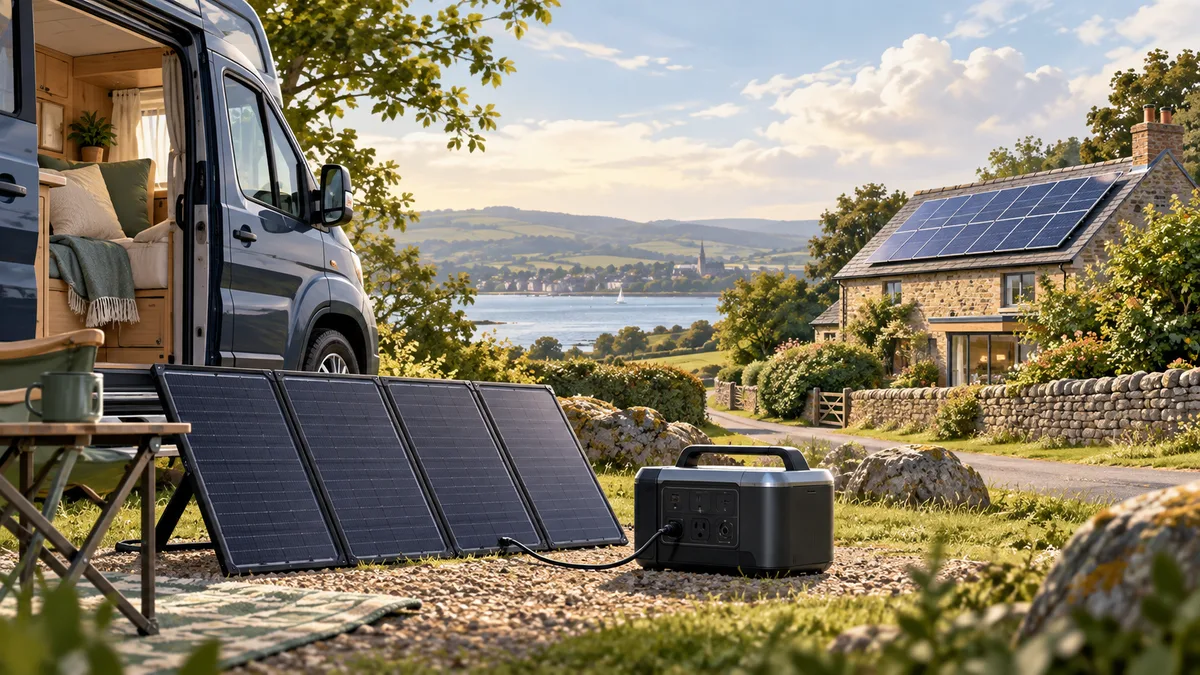
Compare grid-connected home solar with portable panel-and-battery products by purpose, output, storage, connection and safety.
The short answer
Quick answer
Home solar and portable power stations solve different problems. Compare whether you need grid-connected household generation, portable off-grid charging or stored energy, then check the exact device ratings, supported panels, outlets, battery capacity and safety instructions.
Define the job first
A grid-connected solar system is designed to supply a home electrical system under its specified installation rules. A portable power station stores energy in an internal battery and supplies devices through its own outputs.
A portable station may be useful for mobility or backup for selected devices, but it is not automatically a household solar inverter or a way to feed energy into home wiring.
Compare the specifications that matter
- Panel input range, connector type and maximum input power.
- Battery capacity in kWh or Wh and output power in W.
- Supported charging methods, cycle or warranty terms and operating conditions.
- Whether output is suitable for the specific appliance and how long it may run.
- Weight, portability, charging time and safe indoor or outdoor use instructions.
Quick answers
Common questions
Can I plug a power station into a wall socket to power my house?
Do not connect a power station to household wiring unless its manufacturer and a qualified professional specify a supported transfer arrangement. Never backfeed a socket.
Can a portable station use any solar panel?
No. Check the station’s allowed voltage, current, connector and input power against the exact panel specifications.
Further reading
Sources and official guidance
This guide is general information, not an assessment of a specific property or product. Check current official guidance and the manufacturer’s instructions before acting.