
Solar basics
Draft · editorial review needed
Solar panel angle: how to compare your mounting options
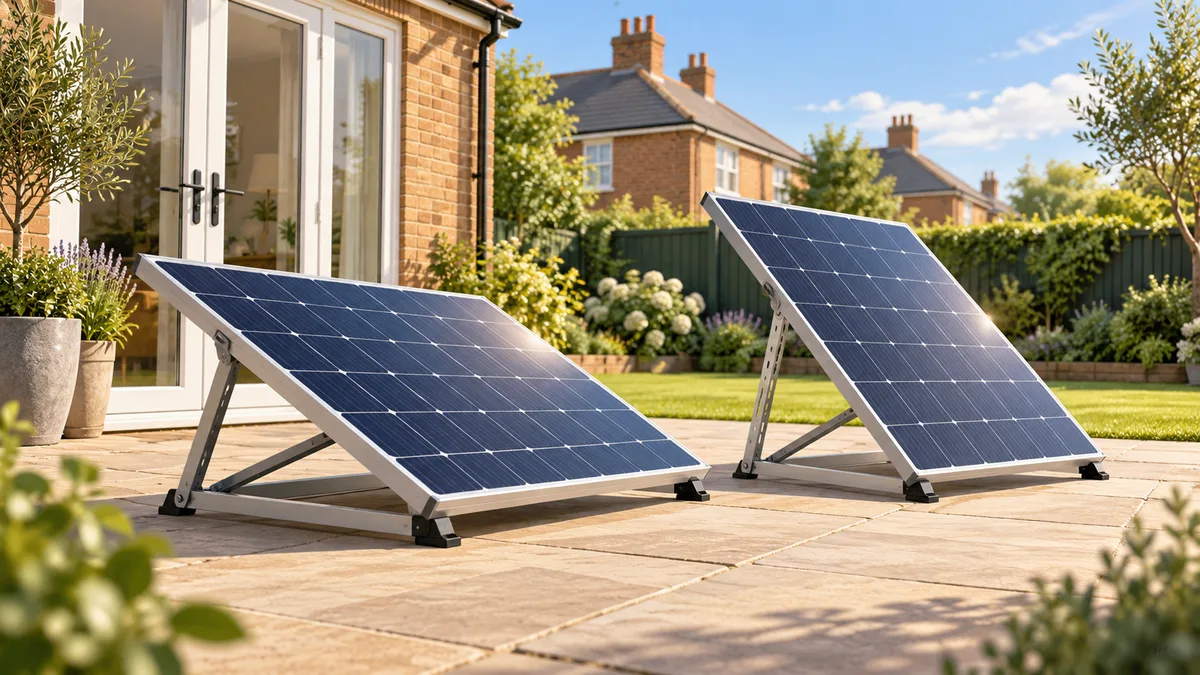
Panel tilt affects sunlight and mounting loads; compare expected generation with secure fixing and the product instructions.
The short answer
Quick answer
The best panel angle depends on location, orientation, shading and system design. A theoretical angle is only one factor; use the manufacturer’s mounting limits and a site-specific estimate, and prioritise a secure installation.
Angle is one part of a larger setup
A tilted panel may capture sunlight differently over the day and seasons, but there is no single angle that guarantees the best result for every UK home. Direction, shade, local weather and inverter limits also affect output.
For fixed rooftop systems, ask an installer to explain the angle used in the generation estimate. For portable or plug-in products, use only the intended frame and adjustments described by the manufacturer.
Do not trade stability for a theoretical gain
A steeper panel can experience different wind forces and may need a mounting system designed for that load. Do not improvise a stand or add ballast unless the product instructions specify it.
Compare the manufacturer’s safe setup, the available space and realistic generation assumptions. Keep drainage, access and maintenance needs in view.
Quick answers
Common questions
What angle is ideal for solar panels in the UK?
There is no universal answer for every roof and system. Ask for a site-specific estimate and follow the installer’s and manufacturer’s design guidance.
Can I tilt a plug-in panel more to increase output?
Only use adjustment positions approved for the exact product. Mounting security and wind safety are essential.
Further reading
Sources and official guidance
This guide is general information, not an assessment of a specific property or product. Check current official guidance and the manufacturer’s instructions before acting.