
Solar basics
Draft · editorial review needed
Solar output in winter vs summer: what changes?
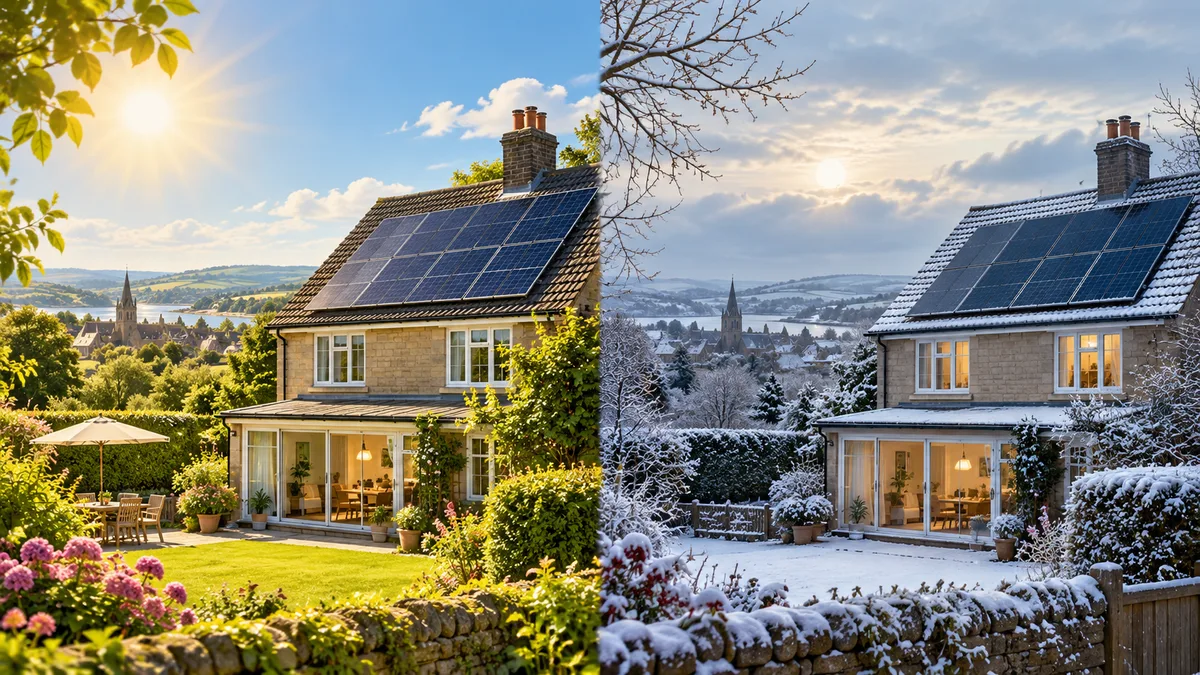
Day length, sun position and weather create seasonal differences; plan with an annual estimate rather than one month’s reading.
The short answer
Quick answer
Solar generation usually follows a seasonal pattern because daylight hours, sun angle and weather change through the year. A summer reading should not be treated as a winter forecast; compare monthly or annual estimates for the exact system and site.
Expect seasonal variation
Longer summer days can provide more opportunity for generation, while winter days are shorter and the sun is lower. Cloud, shade, temperature, orientation and system design also influence output.
A battery can shift some stored electricity to another time, but it cannot create energy that the panels did not generate and it has capacity and conversion limits.
Use a full-year view
When comparing quotes, ask for a monthly generation profile and the assumptions behind it. Compare expected generation with household use by season, especially if heating or other demand changes in winter.
Keep actual readings for later comparison, but account for weather and operating conditions before deciding that a system is faulty.
Quick answers
Common questions
Will solar panels produce nothing in winter?
Not necessarily. They can generate in winter when light is available, but output varies and may be lower than during longer, brighter periods.
Can a battery solve low winter generation?
A battery shifts available energy; it does not replace low generation. Its usefulness depends on capacity, charging sources, tariff and household demand.
Further reading
Sources and official guidance
This guide is general information, not an assessment of a specific property or product. Check current official guidance and the manufacturer’s instructions before acting.