
Home suitability
Draft · editorial review needed
Can renters use plug-in solar? Questions to ask before buying
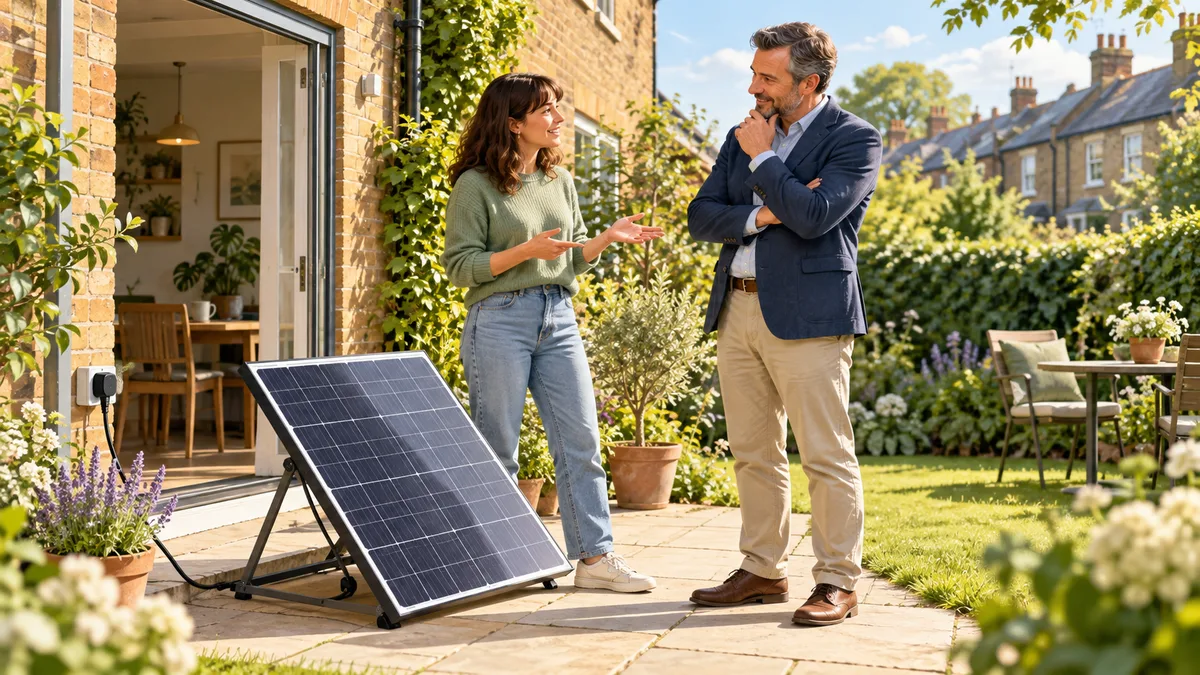
Renters should check tenancy terms, building rules, safe mounting and removal before buying portable solar equipment.
The short answer
Quick answer
A renter should get clear permission before fixing equipment, changing an outdoor socket or using a shared area. Check the tenancy agreement and ask the landlord or managing agent about the exact location, mounting method and cable route.
Get permission for the exact setup
Portable equipment may be removable, but that does not automatically make every installation permitted by a tenancy or building agreement. Explain where the panels would sit, how they would be secured and whether anything would be attached to the building.
For a flat or shared building, ask the freeholder, managing agent or building manager as well as the landlord where appropriate. Balconies and external walls can have fire, structural or communal-property rules.
Plan removal and responsibility
- Ask whether written consent is required and keep the response.
- Agree who is responsible for damage, storage, removal and making good when the tenancy ends.
- Check that the proposed mounting and electrical setup follow the product instructions.
- Do not route cables through a door or window if that can damage the cable or prevent safe closure.
Quick answers
Common questions
Can I take plug-in solar with me when I move?
Some plug-in products are designed to be removable, but check the specific product instructions and obtain any permissions needed for removal and installation at each property.
Can I put panels on a shared balcony?
Do not assume so. Check the lease, tenancy and building-management rules and get permission for the exact proposed setup.
Further reading
Sources and official guidance
This guide is general information, not an assessment of a specific property or product. Check current official guidance and the manufacturer’s instructions before acting.