
Energy use
Draft · editorial review needed
Solar self-consumption: how to use more of the electricity you generate
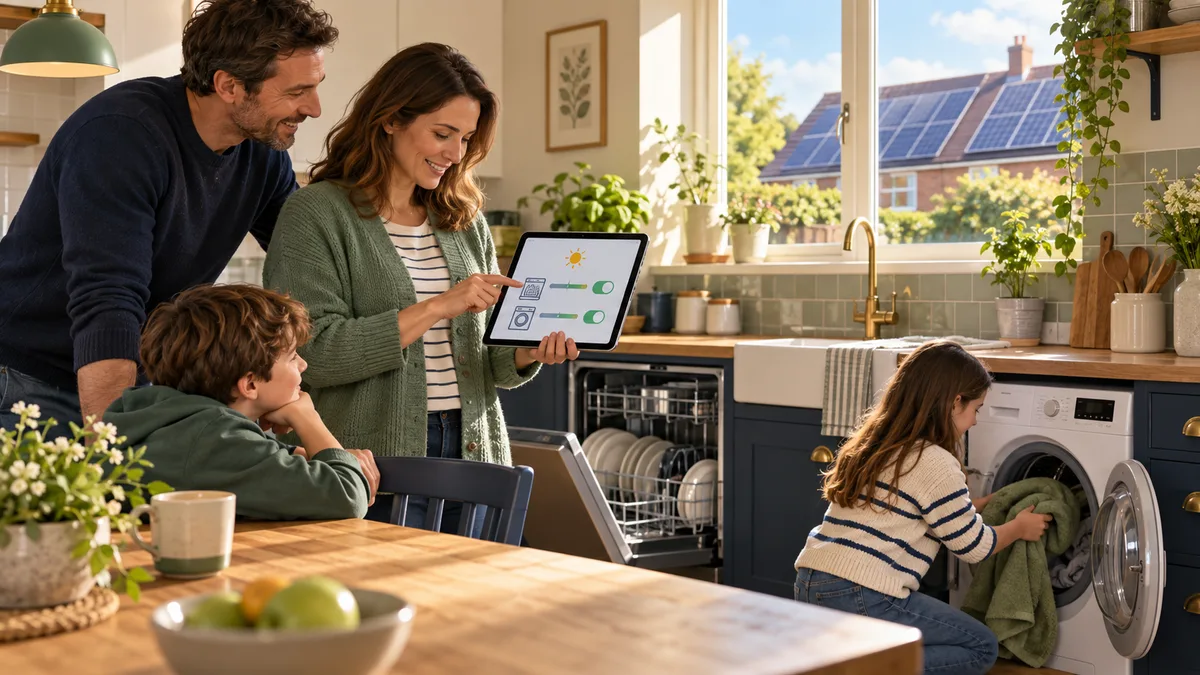
Understand self-consumption and consider shifting flexible electricity use to sunny periods without disrupting household needs.
The short answer
Quick answer
Self-consumption is the share of your generated electricity that your home uses directly. You may increase it by running suitable flexible appliances during generation, but only when convenient and consistent with safety and appliance instructions.
Match flexible use to generation
Solar output varies during the day and by season. If you can move a flexible task, such as running a dishwasher, to a time when panels are generating, some of that use may be supplied directly by solar.
The benefit depends on the appliance load, actual generation and household demand at that moment. Use monitoring data over time rather than assuming every shifted task runs entirely on solar.
Keep routines practical
- Use appliance timers only as directed by the appliance manufacturer.
- Avoid leaving equipment unattended or changing safe operating practices to chase solar output.
- Consider whether a hot-water diverter or battery is compatible and worthwhile for your system.
- Compare the value of using electricity now with any export payment available under your tariff.
Quick answers
Common questions
Does running appliances at midday guarantee free electricity?
No. Solar may cover some or all of the appliance load at a moment, but output and household demand vary. Grid electricity may still be used.
Should I buy a battery to increase self-consumption?
A battery can shift some surplus generation to later, but its purchase and installation cost, efficiency, tariff, use pattern and warranty need to be compared.
Further reading
Sources and official guidance
This guide is general information, not an assessment of a specific property or product. Check current official guidance and the manufacturer’s instructions before acting.