
Solar basics
Draft · editorial review needed
How shade affects solar panels—and what you can check
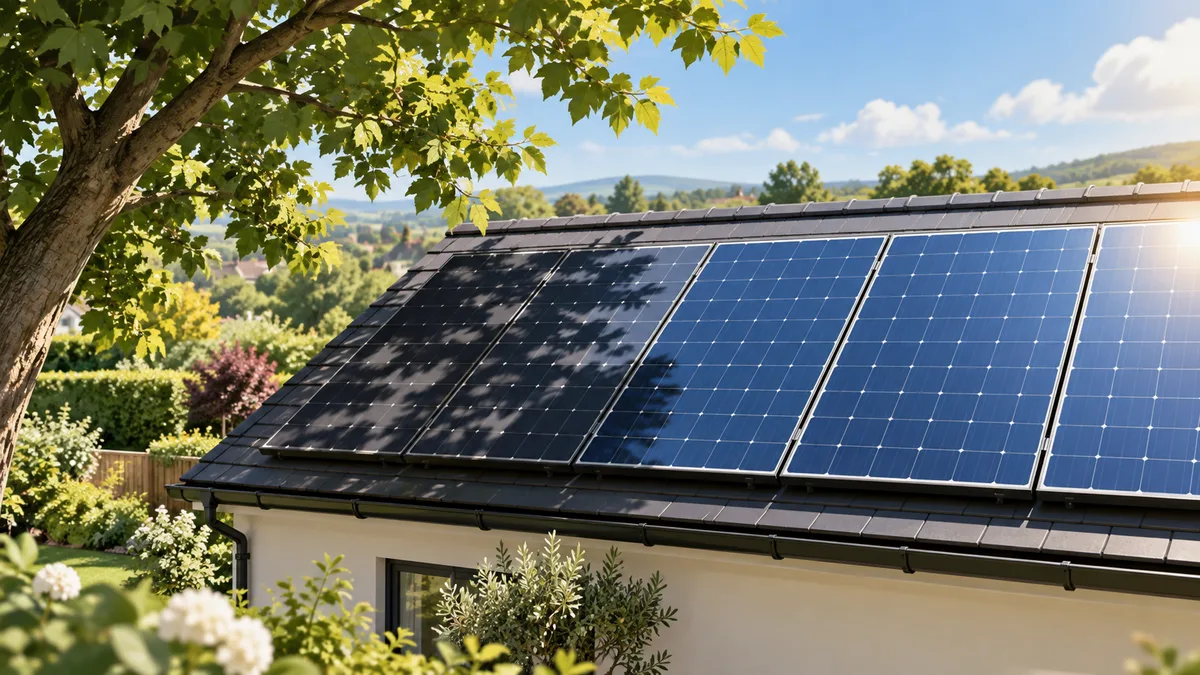
Map shade from trees, chimneys and nearby buildings before choosing a panel position or comparing output estimates.
The short answer
Quick answer
Shade reduces the light reaching solar panels and can lower generation. Its effect depends on how much of the array is shaded, when the shade occurs and the system design, so assess the actual site rather than relying only on roof direction.
Observe shade at different times
Check the proposed position in the morning, around midday and later in the day. Repeat at different seasons if possible, because the sun’s path and nearby foliage change during the year.
Note trees, chimneys, dormers, buildings and objects that may cast shade. Do not cut or alter trees or shared property without authority and appropriate advice.
Ask how the system handles partial shade
Ask an installer to explain the effect of shade on the full system and whether the proposed design changes that effect. Equipment such as module-level electronics may be discussed, but it has costs and should not be treated as a universal fix.
For small plug-in systems, position and spacing remain important. Follow the mounting instructions and do not move panels to a location that creates a falling-object, wind or access risk.
Quick answers
Common questions
Is a shaded south-facing roof always better than an unshaded east-facing roof?
Not necessarily. Shade can materially affect output. Compare site-specific estimates for each option rather than judging direction alone.
Can I remove a tree to improve solar output?
Check ownership, tree-protection rules and local requirements first. Ask an installer to quantify the expected benefit before considering changes.
Further reading
Sources and official guidance
This guide is general information, not an assessment of a specific property or product. Check current official guidance and the manufacturer’s instructions before acting.