
Care and maintenance
Draft · editorial review needed
How to maintain home solar panels safely
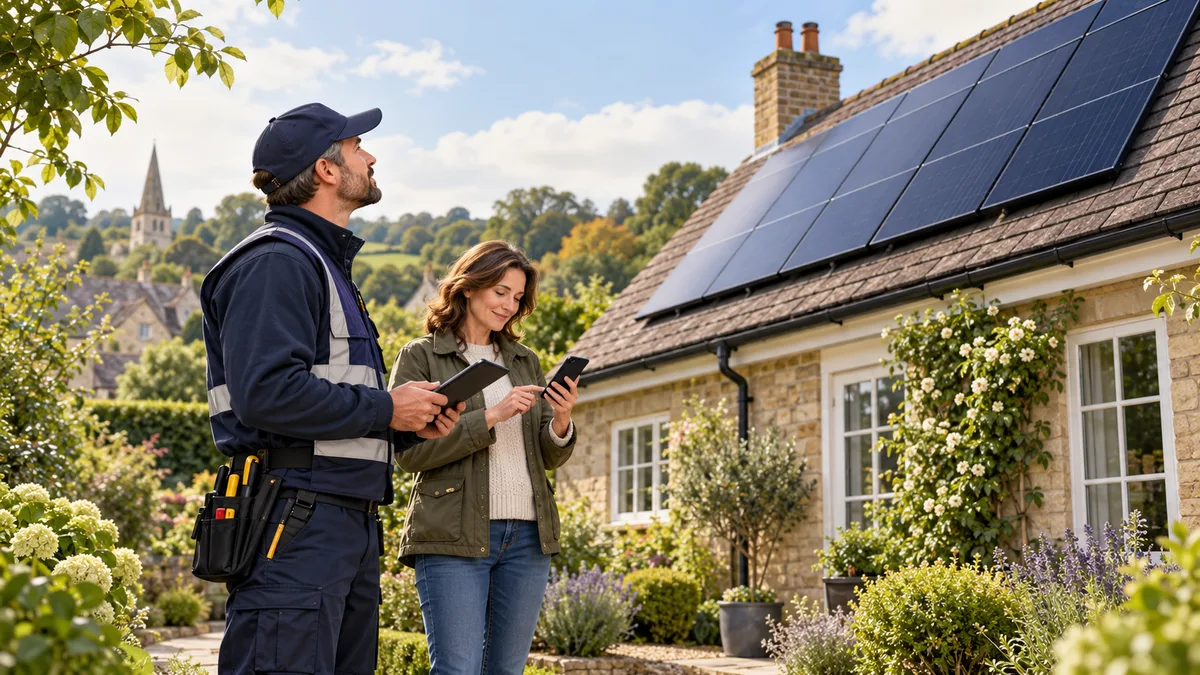
Use monitoring, visual checks and manufacturer instructions; do not climb onto a roof or attempt unsafe electrical repairs.
The short answer
Quick answer
Follow the system manual, monitor output for unusual changes and arrange qualified help for electrical faults or roof access. Do not climb onto panels or clean them with methods that could damage the equipment or put you at risk.
Monitor before arranging maintenance
Check generation over comparable periods and note weather, season and household changes. A short-term drop can have several causes, so compare monitoring information with the inverter display and manufacturer guidance.
Look from a safe position for obvious debris or damage. If you notice loose equipment, cracked glass, exposed cable, heat or unusual noises, keep clear and contact the installer or manufacturer.
Use safe cleaning and repair practices
Rooftop access creates a serious fall risk. Do not climb onto a roof or lean over a balcony to clean panels. Ask the installer whether cleaning is needed and what approved process applies to your system.
Do not open an inverter, disconnect wiring or modify mounting hardware unless you are qualified and the instructions call for it. Keep records of maintenance and service visits.
Quick answers
Common questions
Do solar panels need regular cleaning?
Needs depend on the site, panel and manufacturer guidance. Ask the installer whether cleaning is necessary; never take an unsafe access risk to do it.
What if generation suddenly falls?
Check the system display, weather and manufacturer troubleshooting steps from a safe position. Contact a qualified installer for persistent faults or electrical concerns.
Further reading
Sources and official guidance
This guide is general information, not an assessment of a specific property or product. Check current official guidance and the manufacturer’s instructions before acting.